Dispatches from Berlin and Potsdam
Delve into rich background stories, architectural marvels, notable personalities, and cultural events shaping the capital region. Curated by your German-American historian and local guide, these insights offer a glimpse into the narratives explored on our private tours.
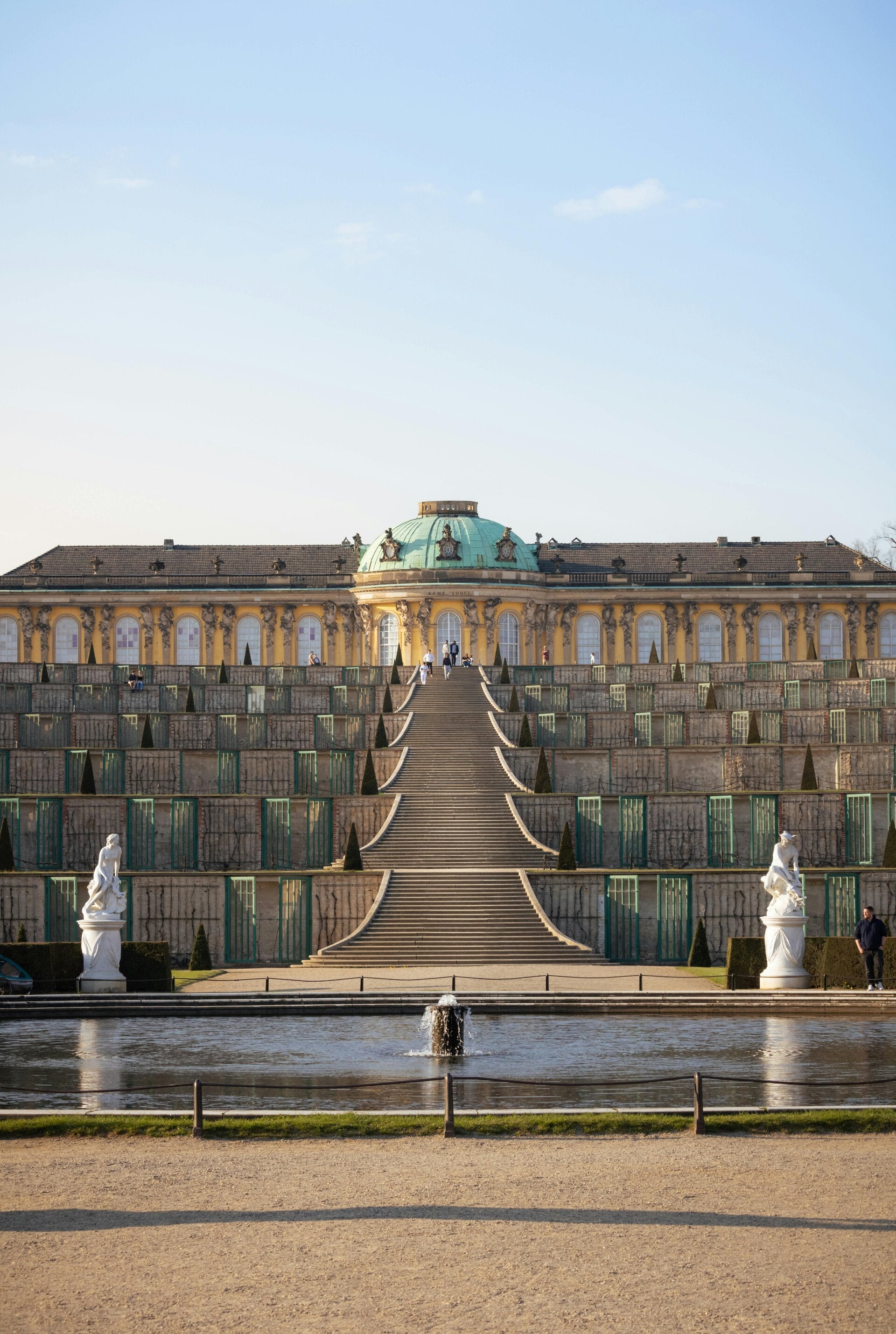
The royal legacy of Frederick the Great
Potsdam’s transformation into a haven of Prussian enlightenment began with Frederick the Great and his beloved summer retreat, Sanssouci. Discover how royal ambition, French philosophy, and intricate landscape design shaped an enduring cultural landmark. Explore these grounds firsthand on our custom historical walking tours.

Echoes of division: Berlin through the Cold War
From Checkpoint Charlie to the remaining segments of the Berlin Wall, the city remains an open-air museum of twentieth-century history. We unpack the human stories, espionage intrigue, and peaceful revolution that reunited a divided nation. Reach out to discuss your impressions and book an immersive Cold War itinerary.
Bombing Berlin
BOMBING BERLIN
In November 2026, Russia hopes to use is vast arsenal of aerial bombs. guided missles and drones to force Ukraine to surrender the Donbass region of eastern Ukraine, which contains the "fortress belt" protecting Kiev. The strategy is to make the lives of Ukrainians living in cities unbearable by destroying their power stations, heating systems, roads, bridges and railways, not to mention the apartment blocks where they live, their places of work, the schools where their children are educated, and the hospitals where they seek care. The Russians hope that this will cause the Ukrainian people to demand from their government a peace settlement under conditions that favor the Russians. Such a "peace" would give the Russian army time to rest, reinforce itself, and prepare for the final assault on Kiev, and then destroy Ukraine as a free and democratic nation once and for all. The Russians believe that terror bombing will lead them to victory.
However, history shows that the strategy of bombing an enemy into submission has never worked. Berlin is a good example of that. During the Second World War, the Royal Air Force and the United States Army Air Force attacked Berlin 310 times, dropping 450.517 tons of explosive- and firebombs on the city. The raids left some 30,000 men, women and children dead, tens of thousands more wounded, and 648 095 homeless. By the end of the war, around a third of all apartments in Berlin had been destroyed as was an equal amount of all the city's buildings.
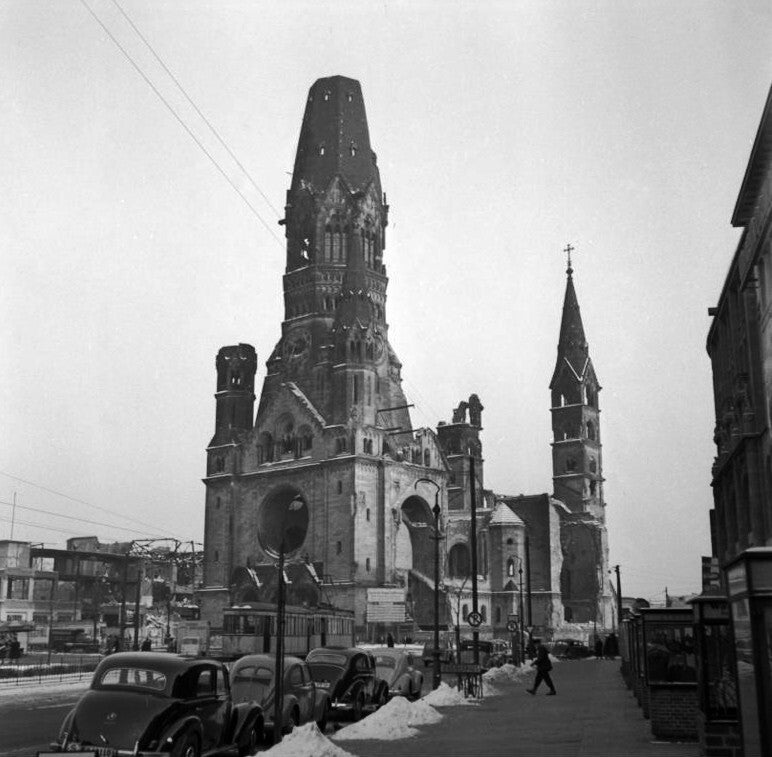
This "Battle of Berlin" began in November 1943, when the Royal Air Force started its campaign of massive "area bombing" of the city. The November raids cost many lives and destroyed famous landmarks such as Charlottenburg Palace and the Emperor Wilhelm Memorial Church. In March 1944, the American Air Force in March 1944 also began attacking Berlin. The British bombed by night, the Americans by day.
The Allies also practiced terror bombing against the German civilian population. Air Marshal Arthur Harris, head of British Bomber Command -- known as "Bomber Harris" -- called the strategy "moral bombing," that is, carrying out bombing raids intended to break the morale of the civilian population. The aim was to provoke them into rising up against the Nazis regime and force Germany to capitulate. On November 3, 1943, November 1943 began, Harris described his plan to the British prime minister Winston Churchill. He said the British could burn Berlin from one end to the other. He predicted that the Allies would lose some 500 planes, but it will cost Germany the war. In the end, the Allies did lose roughly 500 bombers and fighters over Berlin, but the aerial destruction of Berlin and many other German cities did not cost Germany the war.
"Moral bombing" failed to encourage popular resistance to the Nazi regime. People living in a near-constant state of fear are not in the proper frame of mind to plan an organized revolt against a totalitarian state. Their greater concern is surviving for another day. And dropping bombs on defenseless people doesn't tend to incite hatred of their leaders; instead it increases their hatred of the people bombing them. True, there were anti-Nazis among the civilian population of Berlin, as well as victims of the Nazis like Jews and forced laborers.,who believed that every bomb that fell brought them one step closer to liberation, but they were far too few and helpless to present a serious threat to the authorities.
In the end, it could be argued that while the air war contributed to Nazi Germany's defeat -- by disrupting war production and transportation and by diverting resources badly needed elsewhere -- it was ultimately the vast human and material superiorty of the Allies that crushed the German military and achieved victory. The air war also remains a problematic legacy of the "Good War" the Anglo-Americans waged against Nazi Germany.
Germany's best known military historian. Professor Sönke Neitzel, points out that while the Allied air war against Germany was not a war crime according to the international legal standards of the time, it remains a war crime in a moral sense. As he puts it: "What else can dropping bombs on defenceless citizens be?" Nevertheless, it also remains the case that it was Adolf Hitler and the Nazis, as well as their supporters, that set the sprial of violence and destruction into motion.
On July 16, 1945, the American president Harry Truman saw the ruins of Berlin for himself while he and Winston Churchill were waiting for the Soviet dictator Joseph Stalin to arrive for Potsdam Conference. Truman was a combat veteran of the First World War and had seen his share of war destruction. Still, he said that Berlin was "saddest thing he had ever seen in his life," adding, but they only have themselves to blame.
The ruins of the Kaiser-Wilhelm-Memorial-Church, the central landmark of the former West Berlin, remains a vivid reminder of the devastating consequences of the air war over Berlin. One day, there will certainly be a similar memorial in Kiev. The big difference is that while the Allies were able to force Nazi Germany to surrender -- although not primarily through the air war -- the Ukrainian people will never capitulate, no matter what the Russians do to them.
(PS: The decision-makers in Washington D.C. who now believe they can bomb Iran into submission would do well to consider the strategic failure of the Allied air war against Germany.)
Let me show you the Kaiser-Wilhelm Memorial Church, old and new, inside and out, on your custom-designed individual tour of Berlin. Contact me so we can plan it together: kevin.alterfritz@gmail.com.
Image: Von Bundesarchiv, B 145 Bild-F001296-0004 / Brodde / CC-BY-SA 3.0, CC BY-SA 3.0 de, https://commons.wikimedia.org/wiki/Special:Redirect/page/5448339
Source Material: "Berlin. Der Tod kam aus der Luft," Tagesspiegel, April 4, 2013: Berlin: Der Tod kam aus der Luft
Laurenz Demps, Luftangriffe auf Berlin. Die Berichte der Hauptluftschutzstelle (Frankfurt/Main, 2012).